
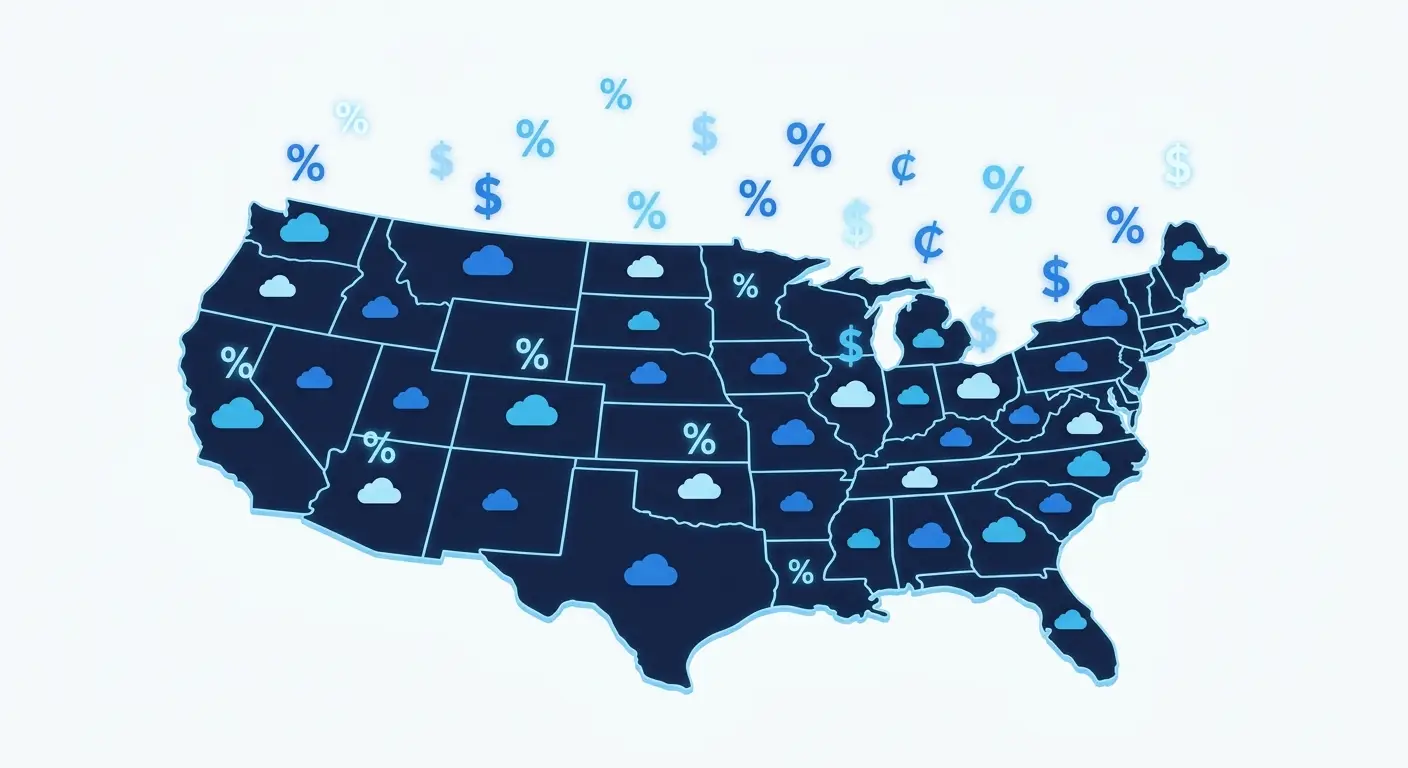
Short answer: sales tax on software is a state-by-state question, you are liable for it whether or not you collected it, and since the 2018 Wayfair decision you can owe it in states where you have no office at all. Here are the practical things to remember.
This is a complex issue, but here are three practical things to remember about collecting sales tax on software.
1. This Is a State Law Issue.
You have to look at the rules on a state-by-state basis.
- Some states don’t tax software, others do (e.g., NY).
- Some states only tax off-the-shelf software but not custom software (e.g., WI).
- Some states tax the software if you send a CD or media but not if it is downloaded (e.g., CA).
Takeaway: figure out where your customers are, then look at that state’s sales and use tax law.
2. Don’t Kick the Can Down the Road.
Too many software companies say “I’ll deal with this later” and then find it is really difficult and expensive to fix. You are supposed to collect and remit sales tax, and if you don’t, you are still liable for it. It’s awkward to call a customer years later asking them to reimburse you for sales tax you forgot to collect. This will come up during any investment or sale of your company.
3. Get Reseller (Exemption) Certificates.
You don’t have to collect sales tax from companies reselling your software, but get a resale certificate from them. Taxing authorities will ask for these.
Economic Nexus: Why Wayfair Changed Everything.
When I first wrote this, the rule was roughly “you collect tax where you have a physical presence.” That changed with South Dakota v. Wayfair, Inc. (2018), where the Supreme Court held a state can require an out-of-state seller to collect sales tax based on economic nexus, not just physical presence. Nearly every state now has thresholds (commonly around $100,000 in sales or 200 transactions into the state in a year). For a SaaS company selling nationwide from a single office, that means you can have a tax collection obligation in dozens of states you have never set foot in. The practical move is to track your sales by state and watch where you cross those thresholds.
Is SaaS Even Taxable? It Depends.
SaaS adds a second layer of complexity, because states do not agree on what SaaS is. Some treat it as taxable tangible personal property or a taxable data-processing service, some treat it as a nontaxable service, and the answer can hinge on whether the customer “downloads” anything at all. So you are running two analyses at once: do I have nexus in this state, and does this state tax my particular flavor of software or SaaS? Neither question has a national answer, which is exactly why this needs a state-by-state look.
Complex and needs analysis on a state-by-state basis, but these are the things that matter. I hope this helps.
For the wider SaaS sales tax picture (and the OpenView CFO Forum framing), see Sales Tax on SaaS: What I Learned at the OpenView CFO Forum.
Disclaimer:
This post is for informational and educational purposes only, and is not legal advice. You should hire an attorney if you need legal advice, which should be provided only after review of all relevant facts and applicable law.